
Department of Computer Science and Engineering (Artificial Intelligence and Machine Learning)
Computing fundamentals with a focus on artificial intelligence and machine learning — preparing graduates for the next generation of technology careers.
Department of Computer Science and Engineering (Artificial Intelligence and Machine Learning)
Computer Science and Engineering – Artificial Intelligence and Machine Learning (B.E. CSE – AI & ML) is one of the most popular courses among engineering aspirants. It focuses on computation, analysis of algorithms, programming languages, program design, software engineering, computer hardware, computer networks and problem-solving skills. Students study the design, development and analysis of the software and hardware used to solve problems in business, scientific and social contexts. Computing touches every aspect of life — education, transportation, entertainment, banking, mass communication, social media, healthcare, business and supply-chain management. Being inherently interdisciplinary, the programme links to psychology, biology, mathematics, physics, education, art and music, helping students understand how computer science fits into a wide range of domains.
Vision
The vision of the Department is to offer an up-to-date, flexible programme that allows graduates to be competitive in the job market and produces well-prepared computing professionals.
Mission
A PHP Error was encountered
Severity: Warning
Message: Invalid argument supplied for foreach()
Filename: views/department_template.php
Line Number: 186
Programme Outcomes (POs)
What every B.E. AI & ML graduate will be able to do.
Engineering knowledge
Apply the knowledge of mathematics, science, engineering fundamentals and an engineering specialization to the solution of complex engineering problems.
Problem analysis
Identify, formulate, review research literature, and analyze complex engineering problems reaching substantiated conclusions using first principles of mathematics, natural sciences, and engineering sciences.
Design / development of solutions
Design solutions for complex engineering problems and design system components or processes that meet the specified needs with appropriate consideration for public health and safety, and cultural, societal, and environmental considerations.
Conduct investigations of complex problems
Use research-based knowledge and research methods including design of experiments, analysis and interpretation of data, and synthesis of the information to provide valid conclusions.
Modern tool usage
Create, select, and apply appropriate techniques, resources, and modern engineering and IT tools including prediction and modeling to complex engineering activities with an understanding of the limitations.
The engineer and society
Apply reasoning informed by the contextual knowledge to assess societal, health, safety, legal and cultural issues and the consequent responsibilities relevant to the professional engineering practice.
Environment and sustainability
Understand the impact of professional engineering solutions in societal and environmental contexts, and demonstrate the knowledge of, and need for, sustainable development.
Ethics
Apply ethical principles and commit to professional ethics and responsibilities and norms of the engineering practice.
Individual and team work
Function effectively as an individual, and as a member or leader in diverse teams, and in multidisciplinary settings.
Communication
Communicate effectively on complex engineering activities with the engineering community and with society at large, such as being able to comprehend and write effective reports and design documentation, make effective presentations, and give and receive clear instructions.
Project management and finance
Demonstrate knowledge and understanding of engineering and management principles and apply these to one's own work, as a member and leader in a team, to manage projects and in multidisciplinary environments.
Life-long learning
Recognize the need for, and have the preparation and ability to engage in independent and life-long learning in the broadest context of technological change.
Programme Specific Outcomes (PSOs)
To analyze, design and develop computing solutions by applying foundational concepts of Computer Science and Engineering.
To apply software engineering principles and practices for developing quality software for scientific and business applications.
To adapt to emerging Information and Communication Technologies (ICT) to innovate ideas and solutions to existing / novel problems.
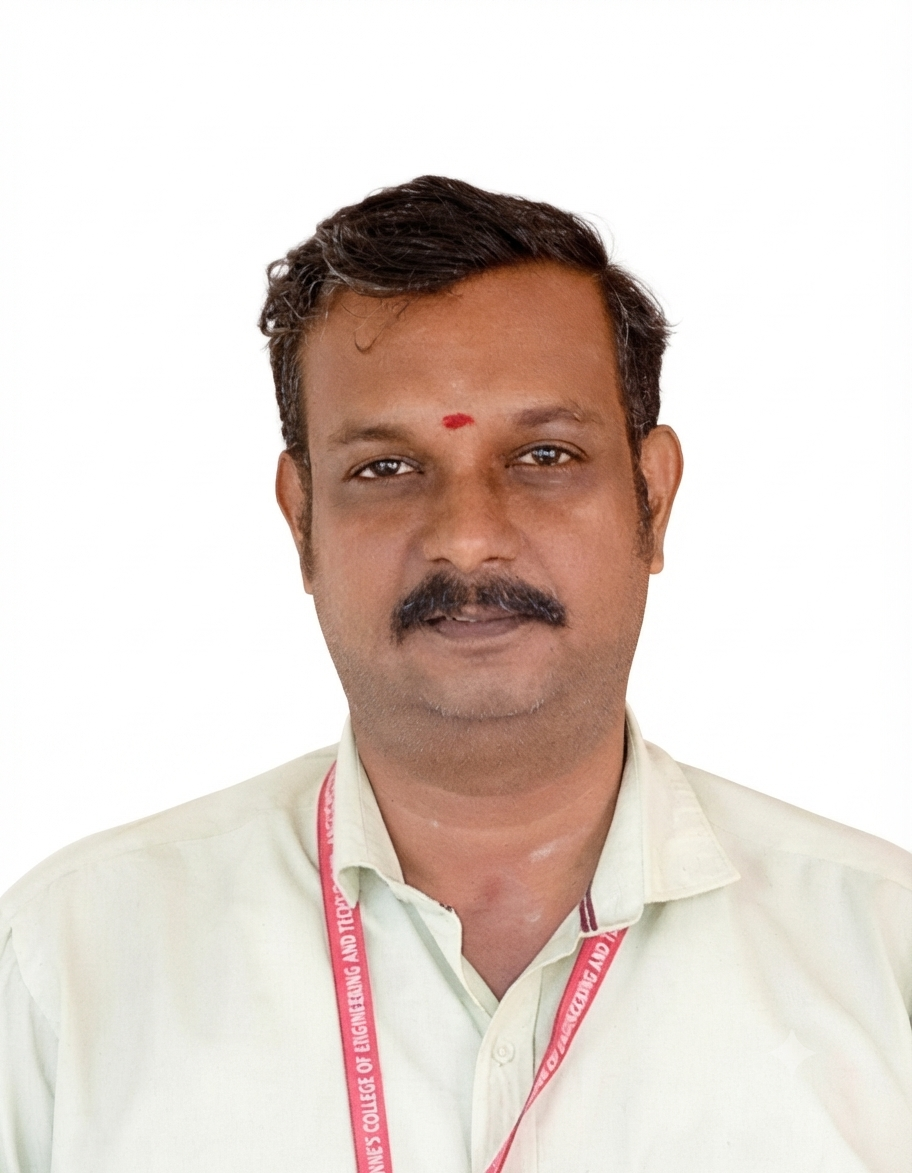
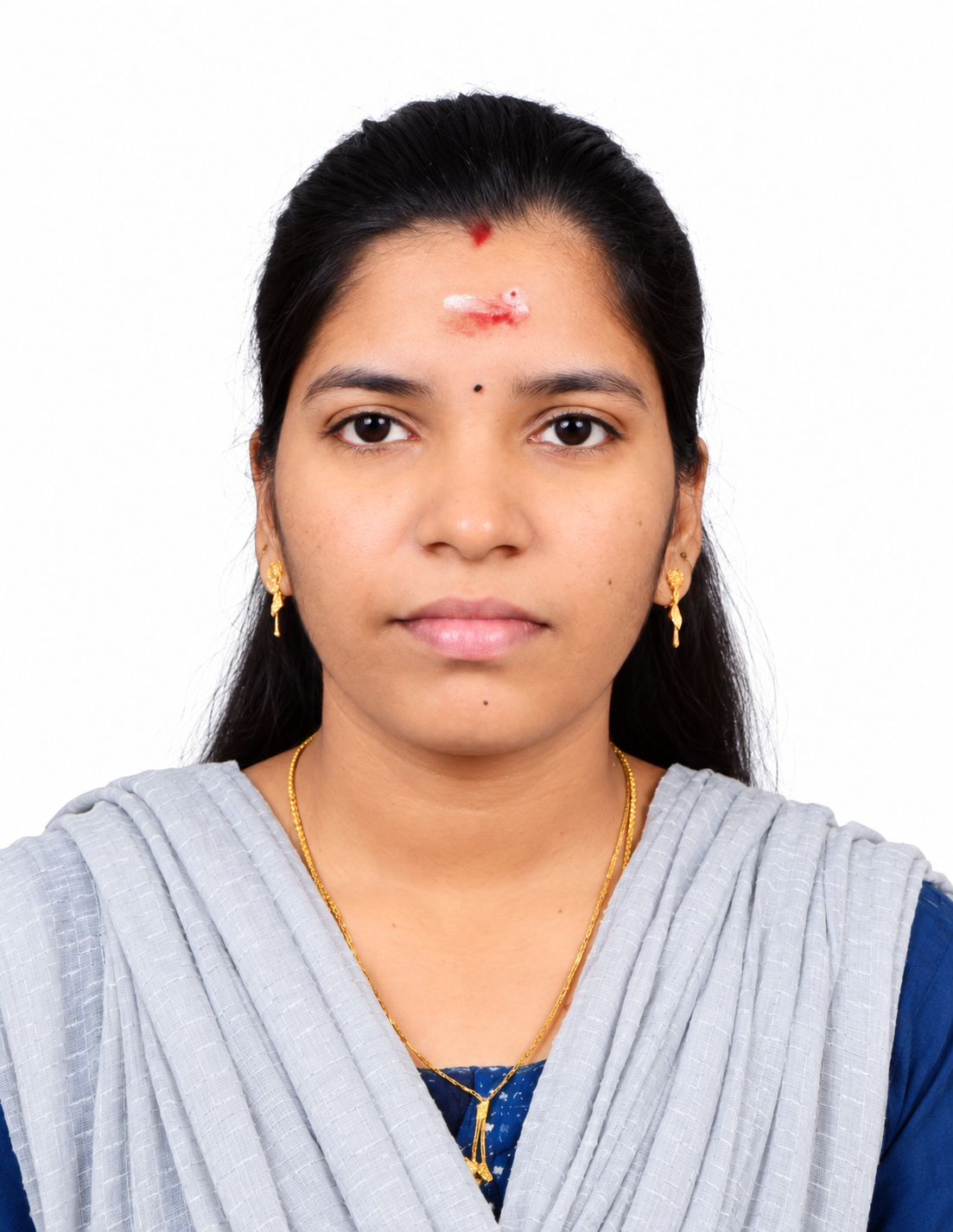
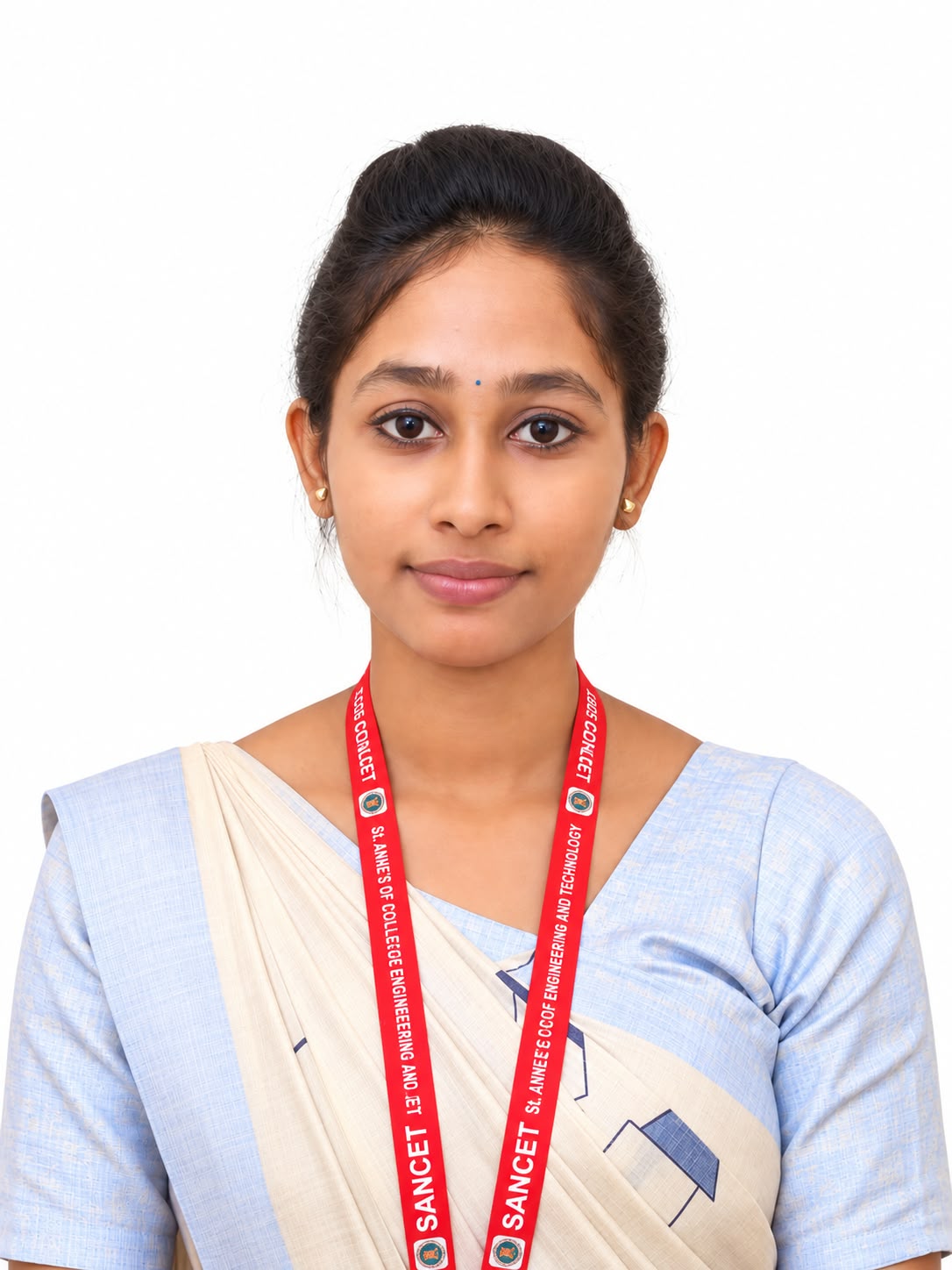
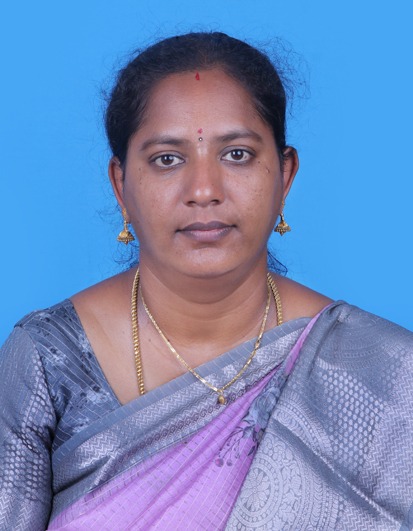
Teaching Staff
Laboratories
Well-equipped labs with modern tools, kits and software for hands-on learning.

1Compiler Lab
Compiler-writing tools such as LEX and YACC are used to implement the different phases of a compiler. Students learn control- and data-flow analysis of programming languages and how to implement simple optimisation techniques.

2Graphics Lab
Gives students a broad understanding of the basic concepts of computer graphics — creating 3D scenes and animations, implementing image manipulation and enhancement, colour generation, transformation of images and the algorithmic development of graphics primitives.

3DBMS Lab
A spacious lab equipped with the latest machines for creating, storing, modifying and managing data. Database management and administration is a highly demanding area with many career opportunities; SQL, Oracle and DB2 are used to train students.

4Operating Systems Lab
Focuses on the Unix operating system. Students learn shell programming and system calls, understand CPU scheduling, process creation and inter-process communication, and analyse various memory-management schemes.

5Network Lab
A cluster of dual-boot Windows and UNIX workstations with J2SDK, J2EE, Java, NetBeans, Apache Tomcat, Oracle and the NS2 network simulator, where students implement protocols, routing algorithms and simulations.

6Data Structures & OOP Lab
Learning and implementing data structures in an object-oriented programming language — memory management and operations on data, with algorithm analysis and design, abstract data types and dynamic data structures.

7Computer Programming Lab
Gives students working knowledge of the office suite and the Red Hat Linux environment for documentation, presentations and worksheets.
Toppers & Rank Holders
Students who led their batch in the AI & ML department.
Batch 2023 – 2027


Student Activities & Achievements

AI & ML Department Association
The AI & ML department has an active engineering association. Technical seminars and national-level symposiums are conducted to give budding engineers ample opportunities to show their talents, and students are enriched with the technical knowledge to be competitive in the employment sector.
Activities 2026 – 2027
5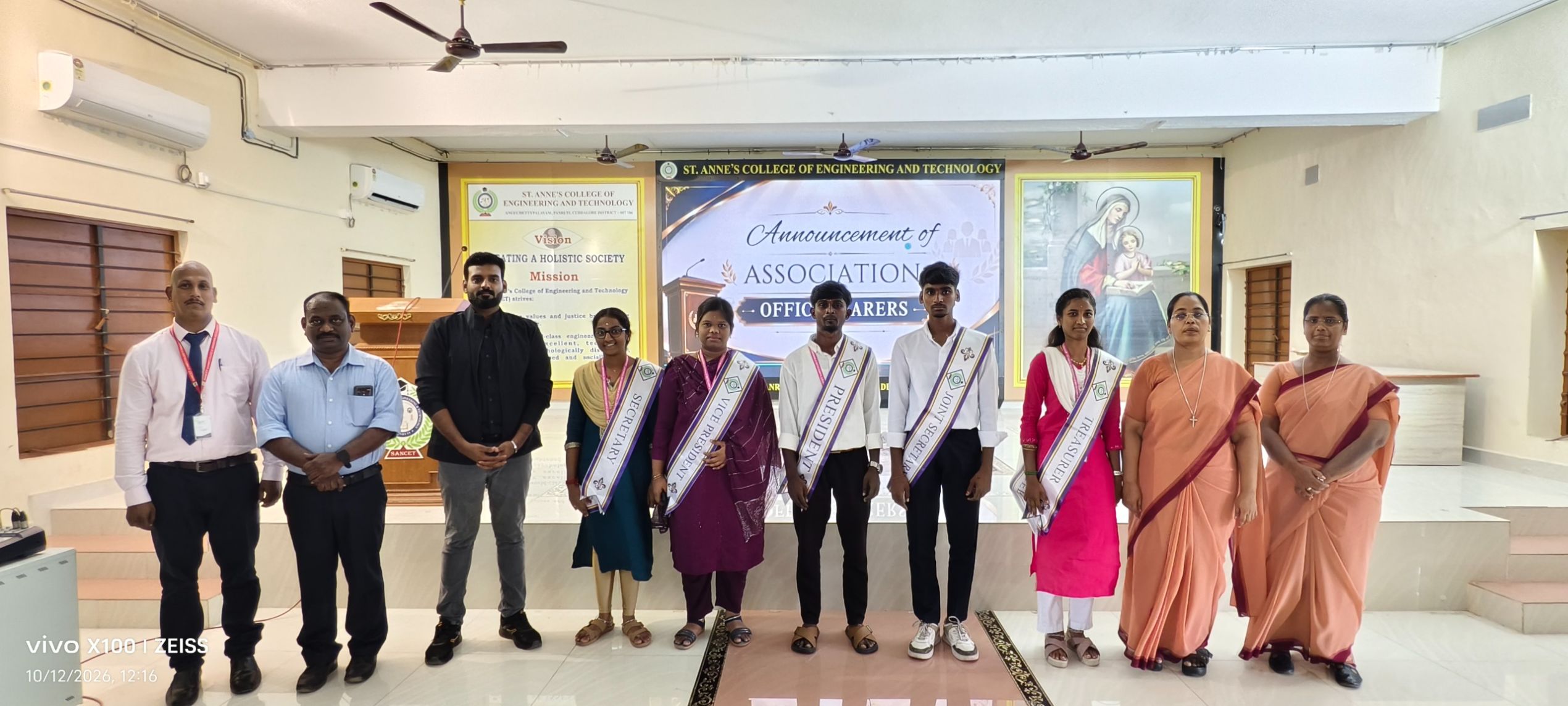
ANEXA Association Inauguration Ceremony – Department of AIML
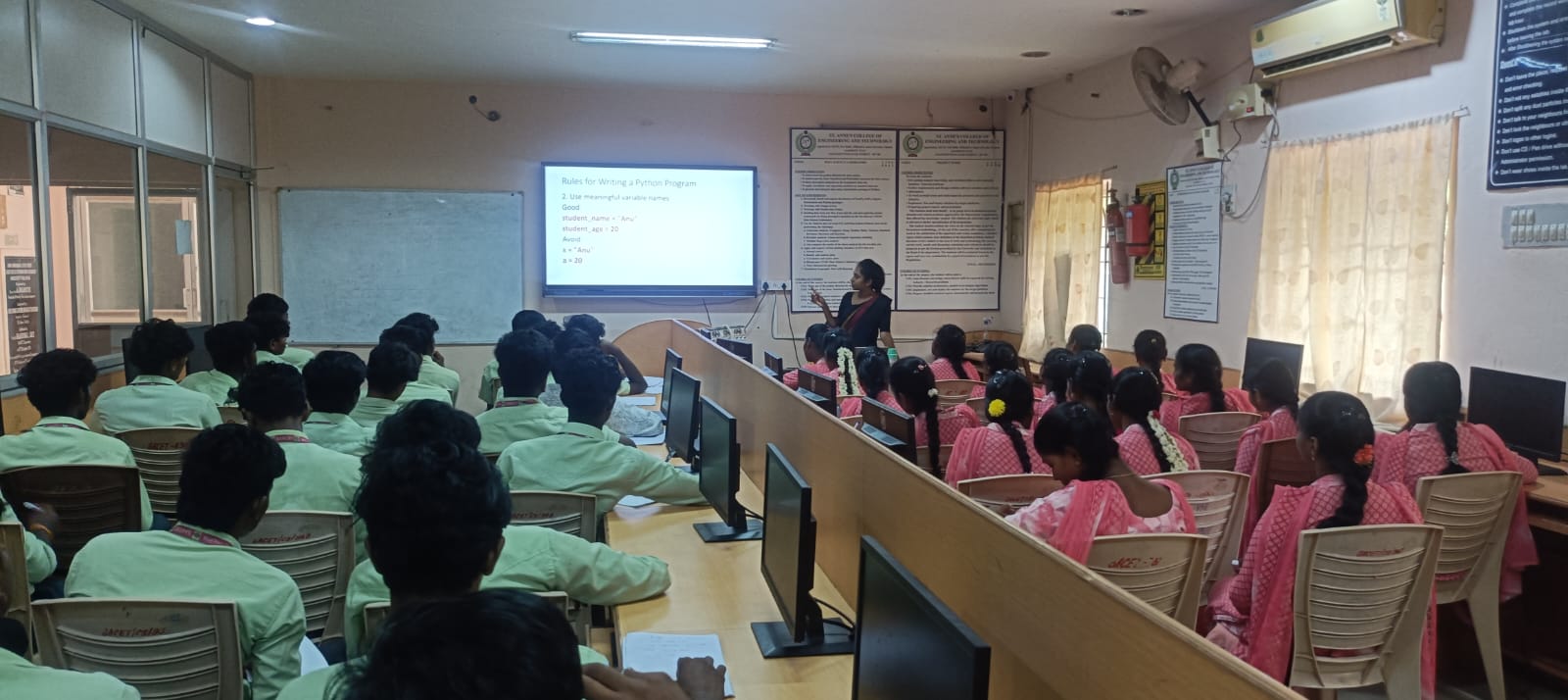
Workshop on Getting Started with Python
.jpg)
GUEST LECTURE ON “QUANTUM COMPUTING”
.jpeg)
Future of AI
.jpeg)
Value Added Course on Prompt Engineering
Activities 2025 – 2026
3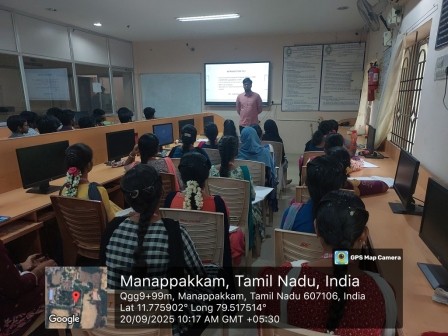
Workshop on "MASTERING IN C and C++"
The Department of Computer Science and Engineering (Artificial Intelligence and Machine Learning) organised a workshop on “MASTERING IN C and C++” on 20-09-2025. The session begins by establishing a strong foundation in the core concepts of both languages. They will learn the basic syntax, data types, operators, and control structures in C, followed by an introduction to C++ and object-oriented features, including classes, objects, inheritance, polymorphism, and encapsulation.
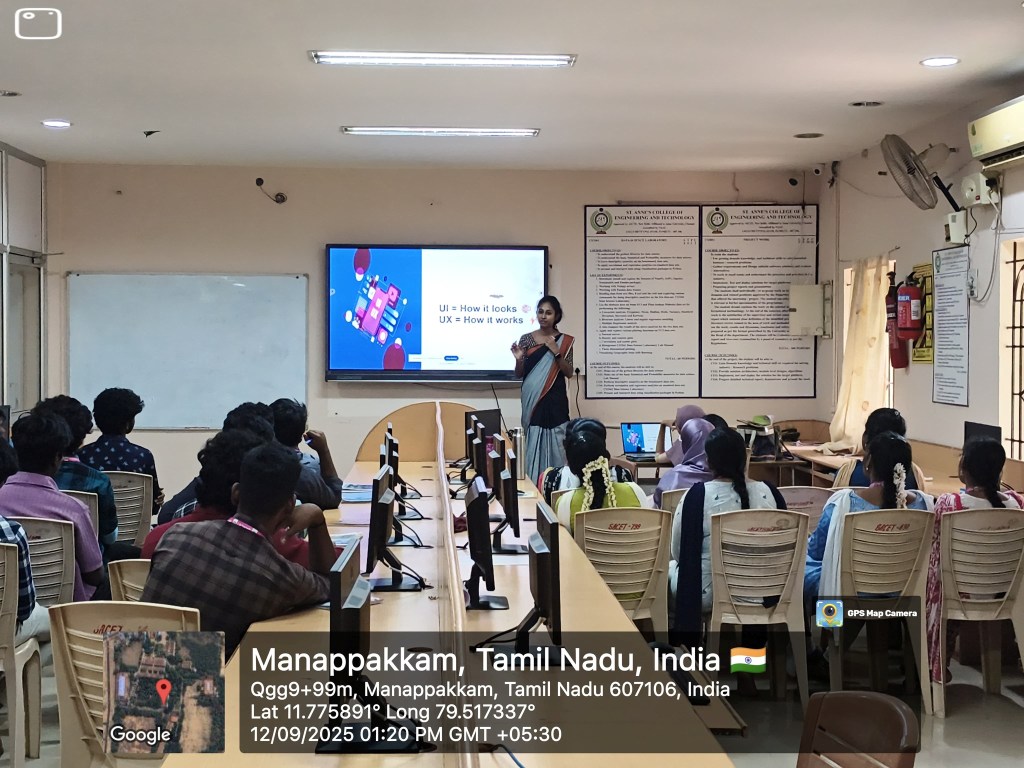
Workshop on “DESIGN SPRINT: A UI/UX Workshop”
Department of Computer Science and Engineering (Artificial Intelligence and Machine Learning) organized a workshop on the topic “DESIGN SPRINT: A UI/UX Workshop” on 12.09.2025 from 01:00 PM to 04:30 PM. Ms. S. Abinaya, AP/CSE(AIML) was the resource person. During the workshop, the resource person introduced the fundamentals of UI (User Interface) and UX (User Experience), highlighting their importance in modern product design and development. She explained how UI/UX plays a crucial role in building user-friendly applications, ensuring both functionality and visual appeal. Students were also exposed to the design sprint methodology, which emphasizes rapid prototyping, testing, and iteration to create effective design solutions. By the end of the workshop, students had gained valuable insights into UI/UX workflows, design principles, and the importance of user-centered design. The workshop proved to be both informative and practical, equipping students with skills that will benefit their academic projects and future careers.
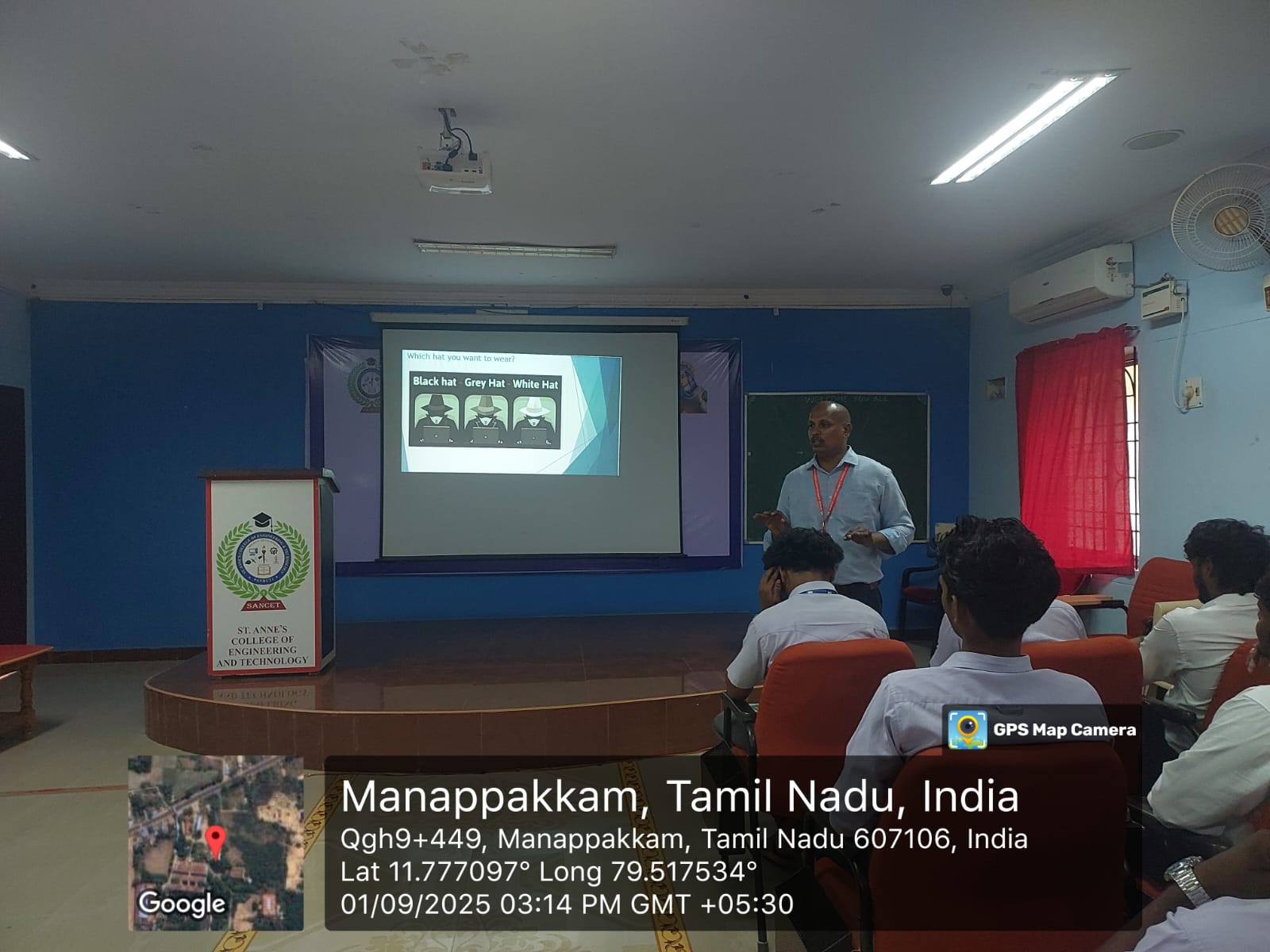
Seminar on “CyberSecurity”
The Department of Computer Science and Engineering (Artificial Intelligence and Machine Learning) organized a Seminar on the topic “CyberSecurity” on 01.09.2025 at 01.00 PM. Mr. S. Rajarajan, M. E, Department of CSE(AIML) was the resource person.
The session began with an overview of cybercrime and the evolving cyber threat landscape. The resource person discussed common forms of cybercrime, including hacking, phishing, Trojans and data breaches. The seminar provided a comprehensive overview of the latest trends in cybersecurity. The session was very interactive, with students encouraged to ask questions and share their experiences. The resource person facilitated discussions on real-world scenarios, which helped students understand the practical applications of the concepts discussed.
At the end of the seminar, feedback was collected from the students. The majority of the students found the lecture highly informative and useful for their academic and professional development.
Activities 2024 – 2025
1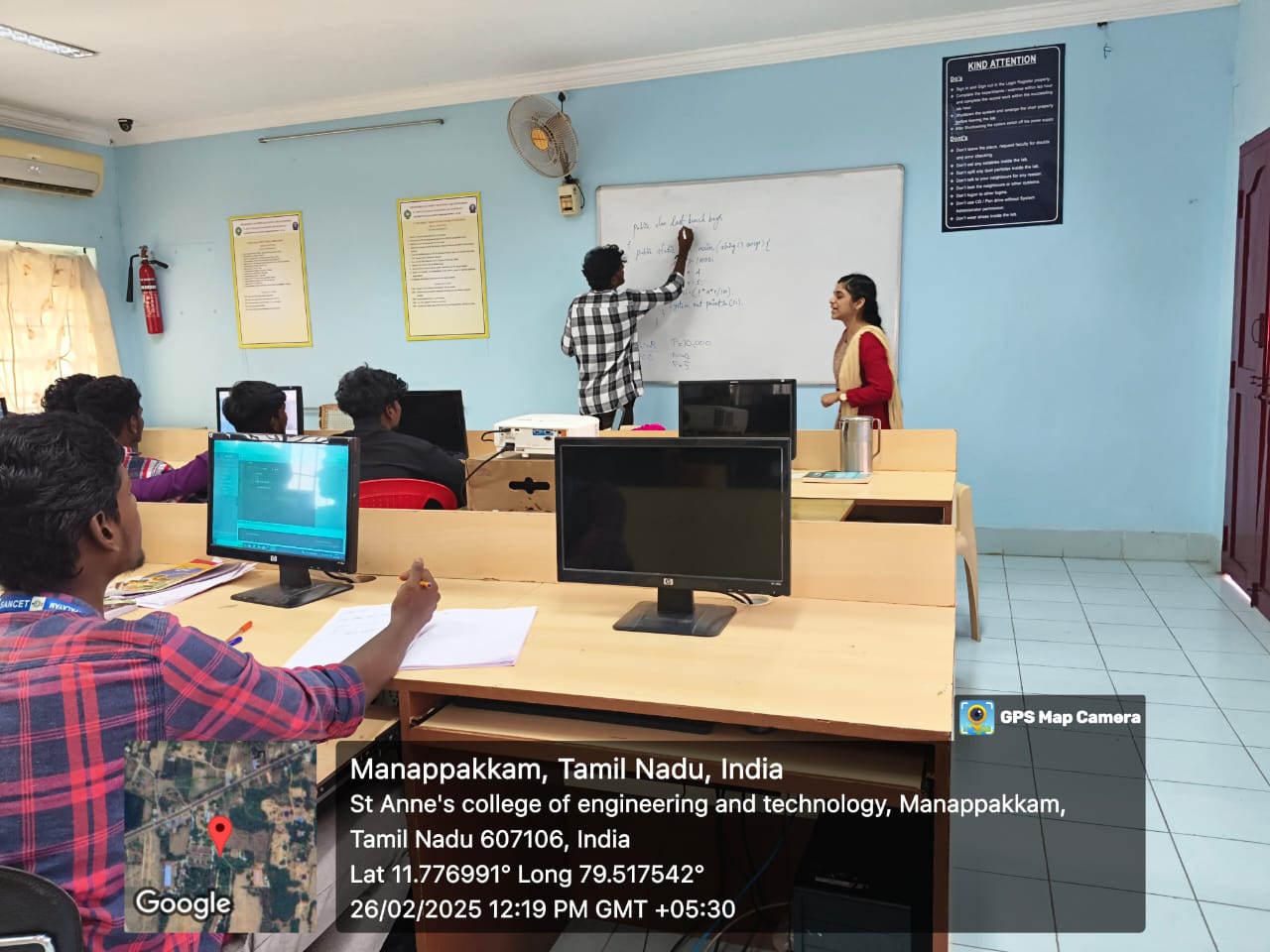
VAC ON ADVANCE JAVA PROGRAMMING
Department of Computer and Science Engineering in association with COSTA had organized a five days Value Added course on " ADVANCED JAVA PROGRAMMING” at computer Laboratory 2 from 24.02.2025 to 28.02.2025 Ms. Priyavarshini , Mediawave Digital Private Limited, Pondicherry and his trainer team was the Resource Person and the event started with a inauguration in the presence of Respected vice Principal Rev Sr. A. Punitha jilt. Our second year student Ms. A. Praveena gave the welcome address to the Resource Person and all the dignitaries on the dais. Our second year student Ms. Sankari introduced the chief guest and all the respected dignitaries them.
The course session was handled by Ms. Priyavarshini, she provided an overview of Advanced Java, explaining how they working.
In the Day 2, Participants were given program to practice the concepts they had learned. They were guided step-by-step through the process of setting up the software and writing the necessary code to learn java programs. This hands-on experience allowed them to grasp the connection between software and programming languages.
In the Day 3, Attendees were taught how to write a own java code. They learned about the various oops concepts, and how to troubleshoot any errors that might occur. After uploading, participants executed the programs to observe the results. They followed step-by-step instructions were given.
In day 4 and day 5 the students discussed Multithreading and JDBC. The students learned about JDBC drivers , Exception Handling . Illustrating how basic concepts could be expanded into complex projects.
The value-added course was concluded with a valedictory function presided over by Ms. P. Vindhya. The event coordinator, Ms V. Keerthana, AP/CSE, welcomes the gathering and thanks the management for giving permission for the arrangement of such a valuable program, as well as the trainers for providing our students with practical knowledge in JAVA in our core areas. The session was followed by a feedback session. Overall, the workshop was so enlightening, and it must have sparked something within students to get innovative ideas and get involved in real-time projects.
